Published: 8 April 2026
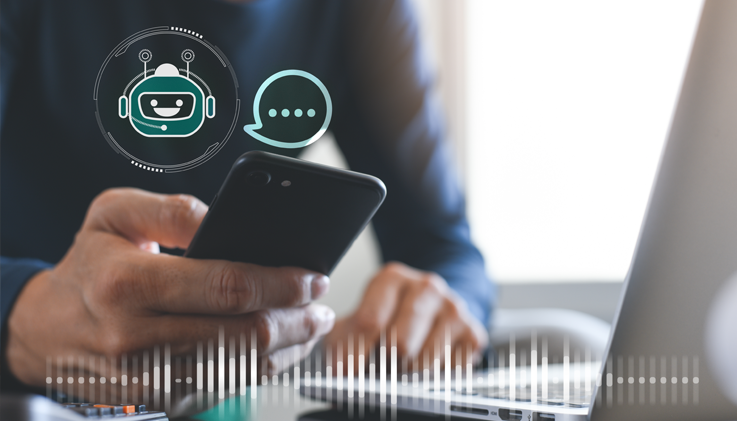
The spelling may vary, VoiceBot, voicebot, or voice bot, but the technology behind it is clearly gaining momentum. At a time when customers no longer just want to click but want to speak, voicebots are becoming a key technology in modern customer service.
But what truly separates an intelligent voice solution from an outdated phone menu? And what does a genuinely user-centered voicebot implementation look like?
When people think of automated phone systems, they often still picture monotone “Press 1” menus. These traditional IVR systems were the standard for years. They were functional but far from customer friendly.
The new generation of voicebots is different. It uses Natural Language Understanding and Large Language Models (LLMs) such as GPT-4 or Claude to understand spoken language in a semantic and contextual way.
A modern voicebot can recognize intent and ask clarifying questions. It can process conversation history and access company-specific knowledge, for example through RAG mechanisms. This turns a simple phone menu into a conversational assistant that not only takes requests but actively supports resolution.
A successful voicebot strategy does not start with technology. It starts with processes. The key is to understand which types of calls occur most frequently, which can be standardized, and which require human intervention.
Only then should the dialogue design be defined. This includes how conversations are guided, when escalation happens, and how the handover to human agents through Human-in-the-Loop is handled.
At ITyX Solutions, this is exactly where we begin. We analyze call reasons and identify automation potential without compromising the quality of customer communication. Our voicebot implementations are built on powerful voice platforms but are always embedded into a holistic process design, supported by AI Ops for continuous improvement.
A voicebot alone is rarely the full solution. Its value emerges when it works seamlessly across channels such as email, chat, web, and messaging apps and connects to a central case management system like ThinkOwl.
For example, a voicebot can capture a customer request while ThinkOwl automatically creates a ticket in the background, retrieves relevant documents, and an LLM prepares a response.
This collaboration of multiple AI Agents and systems, orchestrated through Langflow workflows, ensures callers are supported quickly and competently. If the voicebot cannot resolve the issue, the Human-in-the-Loop logic takes over through internal agents or the customer’s own specialists as Expert-in-the-Loop.
Voicebots can be applied across many industries. Energy providers use them to handle outage reports. Banks use them for card or account blocking. eCommerce companies use them for delivery status inquiries. Telecom providers use them for connection-related support.
Customer identification and payment information can be managed through dialogue-based automation. Contract renewals and callback scheduling can also be handled.
A voicebot does not only provide answers. It can execute transactions, retrieve knowledge, monitor deadlines, and trigger workflows.
Like any AI Agent, a voicebot must continuously learn. That is why we do not operate it as a static system. We run it with AI Ops support. We track metrics such as clarification requests, fallback rates, speech recognition performance, and call drop-offs and optimize continuously.
New FAQs are integrated. Wording is refined. Escalation thresholds are adjusted.
This creates a clear benefit for customers. Automation rates increase while customer satisfaction remains high because conversations feel natural and relevant. Companies can also bring their own language model through a Bring Your Own LLM approach for customization.
Voicebots are here to stay, but they must be designed and integrated correctly. They should not operate as isolated systems. They should function as part of an AI-first BPO model that automates processes across channels while enabling human involvement when required.
ITyX Solutions delivers exactly that. From process analysis to implementation and from LLM-driven prompting to AI Ops operations, we provide voicebot solutions that understand customers and support them effectively.
Whether you write VoiceBot, voicebot, or voice bot, we understand what you need.


You need to load content from reCAPTCHA to submit the form. Please note that doing so will share data with third-party providers.
More InformationYou are currently viewing a placeholder content from Turnstile. To access the actual content, click the button below. Please note that doing so will share data with third-party providers.
More InformationYou are currently viewing a placeholder content from reCAPTCHA. To access the actual content, click the button below. Please note that doing so will share data with third-party providers.
More InformationYou need to load content from hCaptcha to submit the form. Please note that doing so will share data with third-party providers.
More InformationYou need to load content from reCAPTCHA to submit the form. Please note that doing so will share data with third-party providers.
More InformationYou are currently viewing a placeholder content from Turnstile. To access the actual content, click the button below. Please note that doing so will share data with third-party providers.
More Information
 Go back